Because if you did, you would discover the “greatest scam of History” according to the famous unbeaten chess world champion Bobby Fischer, who as a Jew knew what he was talking about.
Comments Off on Glenn Diesen sur X : « A torture chamber of Zelensky was uncovered near Kiev, where over 40 mobilised men were held captive by Ukraine’s National Guard. The youngest victim was reportedly just 14 years old.
For the good reason that its founder Hassan el Bana founded this
brotherhood in 1927 precisely to free Egypt from the growing power
of the British crown in Egypt.
This is why the Brits urged king Farouk of Egypt to eliminate el
Bana in 1949.
Then, and only then, the British got imprisoned the lieutenants
of el Bana, and from the 1950’s used this then empty shell of the
Muslim Brotherhood to infiltrate every single Muslim country,
except Egypt and Saudi Arabia where its banned.
This is how, the MI6 together with CIA under Mossad leadership
assassinated within the Muslim world whoever political figure was
threatening Israel…
Beware of these half-truths polluting the web to exonerate
Israel/Jewish lobby and put the blame on the Goyim.
In the same manner when they tell you the Jesuits and the Black
Nobility are pulling the strings of ROthschild and Rockfeller, my
readers know WHO is really in power…
Question : who is controling the central banks of every single
country (except Iran & NOrth Korea), is it the Jesuits, the
Black Nobility or ROthschild ?
Comments Off on Liz Churchill sur X : « HEROES in the Netherlands 🏆 Lawyer Peter Strassen receives a monumental welcome as he takes on Pandemic Planners Bill Gates, Albert Bourla and Mark Rutte in the Netherlands Civil Court Case… » / X
Comments Off on « Former CIA blows the whistle. The CIA, Mossad, MI5 and MI6 are the covert action arms for the Zionist Jewish global bankers. Every conflict, revolution, terrorist group, coup, cartel and war since their inception was and is started by them and is funded by Jew… / X
Comments Off on ULTIMATE SPECTER/ of remorse, backlash, karma… – Le spectre du remord, retour de bâton, karma ….
Here is why
https://awakenersofthedawn.com/ exposes the Jewish psychoses
and shares the therapy to treat it, according to the
non-circumcised Jew Roger Dommergues. Who himself was a disciple
of Dr. Jean Gautier founder of Endocrino-Psychology.
It goes back to the 1960’s, therefore it’s
time for the Jews to become aware of it, especially since the
Nature published US-Israeli study showed how 40% of Ashkenazi
Jews are proned to psychoses…
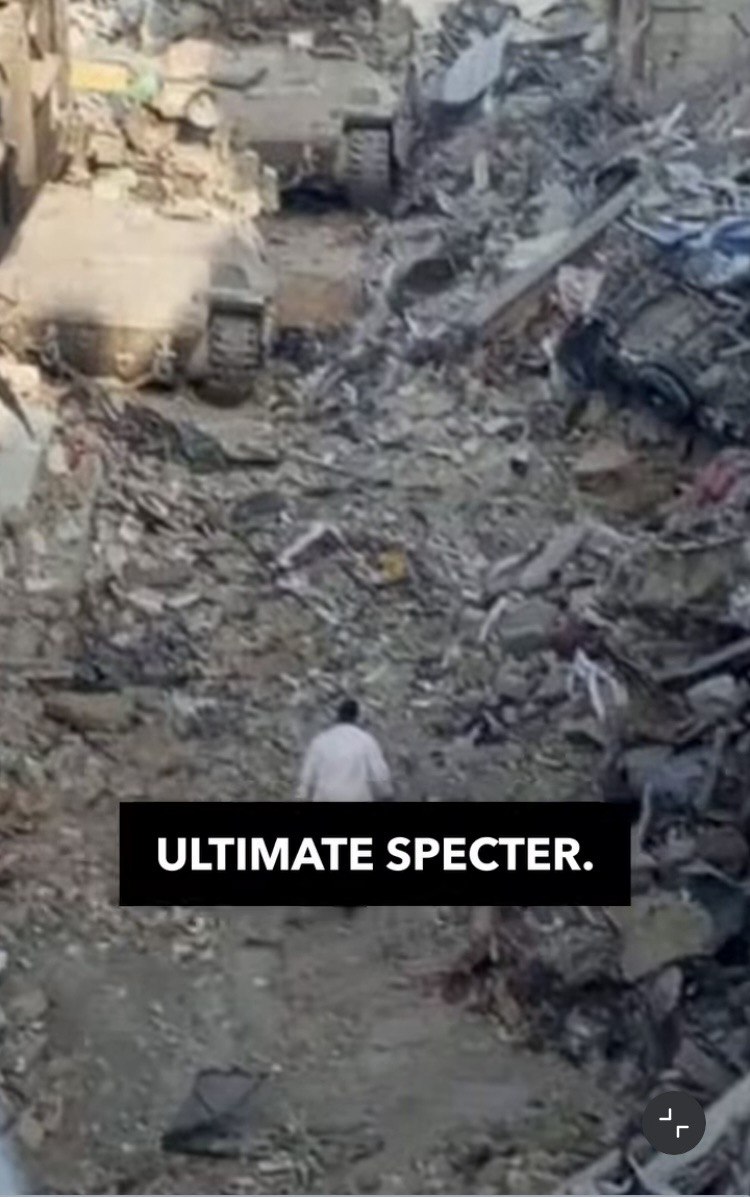
The ultimate specter (which demands a complete
reassessment, both individual and collective),
unless we are haunted by it forever
Le spectre ultime (qui exige une remise en
question totale, tant individuelle que
collective), à moins d’être hantés par lui à
jamais
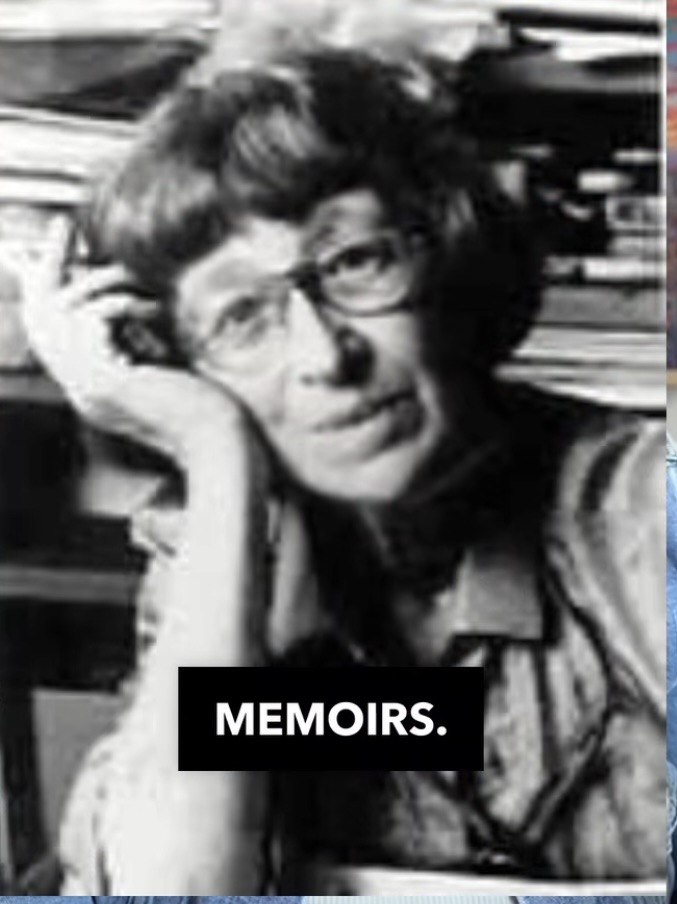
30 years after the Nakba, a woman named
Netiva Ben-Yehuda publishes her memoirs.
She fought in 1948 as part of the Palmach*.
I recently read a study by Dr. Efrat Ben-Ze’evn
about how the violence of 1948 has haunted
generations, and in that study she focused
heavily on these memoirs.
Netiva
Ben-Yehuda did not write about glory. She wrote
a confession. She wrote about the village of Ayn
Az-Zeitun, where her unit took over 30
Palestinian men as prisoners and executed them.
Her job was to cover it up. She was commanded to
go down to the creek where their bodies were
left and untie the ropes from their hands and
their feet. The ropes that they were bound with
before they were executed. She described
watching an intelligence officer in Safad
execute Palestinian prisoners one by one by one
with a hoe. By the ninth man, she broke down in
tears and begged the officer to spare his life.
She also confessed to her own violence. She
wrote about a bus they ambushed with civilians
on it. And as these civilians ran towards her,
she shot them at close range. She carried these
truths that haunted her for 33 years before she
broke her silence. The newly formed state of
Israel wanted a story about heroes, but she gave
them a confession of what they did to the
Palestinians.
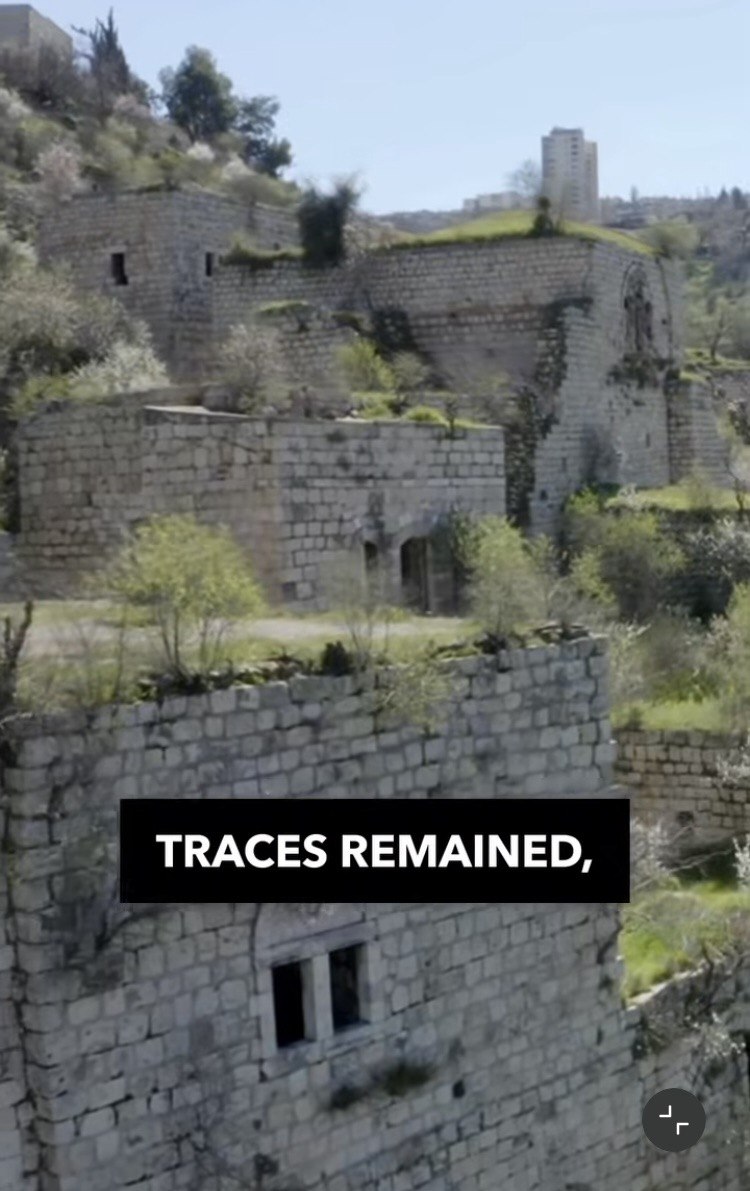
They tried
to erase the evidence and existence of what was,
but the land remembered, and the physical traces
remained, the stone terraces, the fruit trees.
The land itself kept speaking for and about the
people who were uprooted.
Le
spectre hante Netiva Ben-Yehuda...
30 ans après
la Nakba, une femme du nom de Netiva
Ben-Yehuda publie ses mémoires. Elle a
combattu en 1948 au sein du Palmach*. J’ai
récemment lu une étude de la docteure Efrat
Ben-Ze’evn sur la manière dont la violence de 1948
a hanté des générations, et dans cette étude, elle
s’est largement appuyée sur ces mémoires.
Netiva Ben-Yehuda
n’a pas écrit pour vanter la gloire. Elle a rédigé
une confession. Elle a raconté l’histoire du village
d’Ayn Az-Zeitun, où son unité avait fait
prisonniers plus de 30 hommes palestiniens avant de
les exécuter. Sa mission consistait à dissimuler ces
faits. On lui avait ordonné de descendre jusqu’au
ruisseau où leurs corps avaient été abandonnés et de
détacher les cordes qui leur liaient les mains et
les pieds. Les cordes avec lesquelles ils avaient
été ligotés avant leur exécution. Elle a décrit
avoir vu un officier des services de renseignement à
Safed exécuter des prisonniers palestiniens un par
un à l’aide d’une houe. Au neuvième homme, elle a
fondu en larmes et a supplié l’officier d’épargner
sa vie. Elle
a également avoué ses propres actes de violence.
Elle a raconté l’embuscade tendue à un bus
transportant des civils. Et alors que ces civils
couraient vers elle, elle leur a tiré dessus à bout
portant. Elle a porté en elle ces vérités qui l’ont
hantée pendant 33 ans avant de rompre le silence. Le
tout nouvel État d’Israël voulait une histoire de
héros, mais elle leur a livré un aveu de ce qu’ils
avaient fait subir aux Palestiniens.
Ils ont tenté
d’effacer les preuves et l’existence de ce qui avait
été, mais la terre s’en souvenait, et les traces
matérielles subsistaient : les terrasses de pierre,
les arbres fruitiers. La terre elle-même continuait
de parler au nom et à propos des personnes qui
avaient été déracinées.
The
French philosopher, Jacques Derrida, in 1993,
wrote a book called Specters of Marx**). He
chose the word specter carefully. It derives
from the Latin word meaning to look or to examine.
It has an etymological link to visibility and to the
act of examining. A specter isn’t just a spooky
figure. It is a presence that forces you to look
at it. It demands to be seen.
Derrida believed that when a
terrible injustice happens and no one is held
accountable, the past doesn’t just fade away. It
becomes a specter.
It is not a physical body, but a trace and a voice
that disrupts time. The specter interrupts the story
and prevents it from closing. These specters are the
return of the suppressed and the excluded, neither nor
alive, nor fully present, nor fully absent. If that is
true, the spirit of the Palestinian people is the
ultimate specter.
`
* Strike Phalanges/ Companies
** https://www.seuil.com/ouvrage/spectres-de-marx-jacques-derrida/9782021568509
En
1993, le philosophe français Jacques Derrida
a publié un ouvrage intitulé Spectres de Marx**.
Il a choisi le mot « spectre » avec soin. Ce
terme dérive d’un mot latin signifiant « regarder
» ou « examiner ». Il présente un lien
étymologique avec la visibilité et l’acte
d’examiner. Un spectre n’est pas seulement une
silhouette effrayante. C’est une présence qui vous
oblige à la regarder. Elle exige d’être vue.
Derrida estimait quelorsqu’une terrible injustice se
produit et que personne n’est tenu pour
responsable, le passé ne s’efface pas simplement.
Il devient un spectre.
Ce n’est pas un corps physique, mais une trace et une
voix qui perturbent le temps. Le spectre interrompt le
récit et l’empêche de se clore. Ces spectres sont le
retour de ce qui a été refoulé et exclu, ni tout à
fait vivant, ni tout à fait présent, ni tout à fait
absent. Si cela est vrai, l’esprit du peuple
palestinien est le spectre par excellence.
Does anyone
know where I can read these memoirs? I couldn’t
find anything online. I also searched in Hebrew
(ex-israeli) and noticed that in Hebrew they
completely erased that part of her life and only
presented her as a feminist, zionist, badass
female warrior.
The land of
Canaan, which was already inhabited, was
supposedly promised to you by God 3,300 years
ago, but the only evidence of this promise was
not written until five centuries later by… the
beneficiaries of this promise. You will
understand that the inhabitants of this
territory and 90% of the planet do not agree.
The need
in Gaza is GREATER now than ever. So
after you leave a comment or an emoji
here…please DO SOMETHING REAL. Anera and MECA
other small charities are there ON THE GROUND in
Gaza – delivering food and water and tents. And
even $20 to Anera.com. or Alianah.org or UNRWA
USA or thesameerproject,org or Gaza Soup Kitchen
or OperationRealife or MECA (Middle East
Childrens Alliance) is a BIG help. And no, I
don’t work for any of them. I just donate small
amounts EVERY WEEK. Look, you can’t do
EVERYTHING. But you can do $20. So do it. PS: Be
honest. YOUR. EMOJI. DOESN’T. FEED. ANYBODY. But
your $20 does. So do it. $20. Thank you. ❤️
Monsters are
not haunted, they just have the right vocabulary
to elicit empathy once they have committed their
dastardly deeds. Recall these words of Golda
Meir saying “We cannot forgive them [Arabs] for
forcing us to kill their children”.
Stop
GENOCIDE against Palestinians and Lebanese, stop
stealing land in Syria! All people deserve to
live in peace, safety, justice, and freedom! End
the apartheid ethno-supremist state! Hold
government criminals accountable for their
crimes against humanity! Free Palestine and Free
the world!
The
Palestinians not only their people, but their
landing culture, are being erased.
They are the
product of evil terrorism, and those who support
them thought they would change or that they
could change; stupidity is no excuse for
continuing to support this terrorist state.
Watch “Tantura“,
a documentary by Alon Schwarz. The interviews
are heart-breaking 💔
The Nazis and
the genocide have persisted for 80 years
I’m amazed
she could live with herself for a single minute
There is an
Israeli group, an organization, called Zochrot
(“We Remember”). in the 1990s, after Israeli
archives related to the 1948 Nakba (“war” in
Israeli terminology) were opened to researchers
in 1988 and the “new historians” began to
present a more accurate account of the founding
of Israel, Zochrot conducted numerous interviews
with Israelis who had fought and committed
atrocities during that period. The organization
maintains extensive oral history archives,
including videos and transcripts of these
interviews, which, I believe, are still
available today on its website.
That is why
they cut down the native trees to replace them
with trees from their homeland. God called it
“the land flowing with milk and honey”. They are
destroying all the native trees, but the land
will remember.
Pure Heinous
rampant depravity perpetrated against innocent
people.
More brutal
than the Nazis?
Some former
Israeli soldiers also claim to be haunted by the
ghosts of those they murdered… You can’t build
a “holy land” on blood and bones… There is
NOTHING “sacred” about that…
The spirit
of the Palestinian people is the ultimate
specter 😢👏
The
anti-Semitic Zionist paramilitary groups were
already in the 19th century commiting murders,
bribing, etc. all over the world. There were
many such groups, but three of them were
particularly notorious for their crimes: the
Hagana, the Irgun/ Etzel, and the Lechi. These
terrorists groups jointly planned the massacre
of the Palestinian village of Deir Yassin in
April 1948, as well as other atrocities.
Ben-Gurion—the pseudonym of David Grün—turned
these terrorist groups into the Israel Defense
Forces (IDF)!
Where power
and politics fail, it’s the people who make a
difference. I recommend downloading the ‘No
Thanks’ app. It’s a good place to start. Feel
free to share it. @nothanks_app
As if The
Tell-Tale Heart and this tormented
narrator—driven mad by the heart beating beneath
the flooring—were not just a short story, but a
very real account.
May their
heinous crimes haunt them for the rest of their
lives. Let’s end the occupation. Let’s end the
suffering; let’s end the destruction. Let’s end
the apartheid state of Israel 🇮🇱 Free
Palestine 🇵🇸
Commentaires
Quelqu’un
sait-il où je peux lire ces mémoires ? Je n’ai
rien trouvé en ligne. J’ai également cherché sur
des sites en hébreu (ex-israéliens) et j’ai
remarqué que cette partie de sa vie est
complètement effacée, seule son image de
féministe de sioniste et de redoutable guerrière
étant mise en avant.
La terre de
Canaan, qui était déjà habitée, vous aurait été
promise par Dieu il y a 3 300 ans, mais la seule
preuve de cette promesse n’a été consignée par
écrit que cinq siècles plus tard par… les
bénéficiaires de cette promesse. Vous
comprendrez que les habitants de ce territoire
et 90 % de la planète ne sont pas d’accord.
Les
besoins à Gaza sont PLUS IMPORTANTS que jamais.
Alors, après avoir laissé un commentaire ou un
emoji ici… SVP, agissez concrètement. Anera,
MECA et d’autres petites associations
caritatives sont sur le terrain à Gaza – elles
distribuent de la nourriture, de l’eau et des
tentes. Et même 20 $ versés à Anera.com, Alianah.org,
UNRWA USA, thesameerproject.org,
Gaza Soup Kitchen, OperationRealife ou MECA
(Middle East Children’s Alliance) constituent
une aide précieuse. Je ne travaille pour aucune
de ces organisations. Je me contente de faire de
petits dons chaque semaine. Tu ne peux pas tout
faire, mais tu peux donner 20 $. Alors fais-le.
PS : Sois honnête. Ton emoji ne nourrit
personne, tes 20 $ si. Alors fais-le. 20 $.
Merci. ❤️
Les monstres ne sont pas
hantés, ils ont juste le vocabulaire adéquat
pour susciter l’empathie une fois qu’ils ont
commis leurs actes ignobles. Rappelez-vous ces
paroles de Golda Meir : « Nous ne pouvons pas
leur pardonner [aux Arabes] de nous avoir
contraints à tuer leurs enfants ».
Arrêtez le génocide contre
les Palestiniens et les Libanais, cessez de
voler des terres en Syrie ! Tous les peuples
méritent de vivre dans la paix, la sécurité,
la justice et la liberté ! Mettons fin à cet
État d’apartheid ethno-suprémaciste ! Que les
criminels au pouvoir répondent de leurs cimes
contre l’humanité ! Libérons la Palestine et
Libérons le monde !
Les Palestiniens sont en
train d’être effacés, non seulement en tant
que peuple, mais aussi en tant que culture
ancestrale.
Ils sont le fruit d’un
terrorisme malfaisant, et ceux qui les
soutiennent pensaient qu’ils changeraient ou
qu’ils pouvaient changer ; la stupidité n’est
pas une excuse pour continuer à soutenir cet
État terroriste.
Regardez « Tantura», un documentaire d’Alon Schwarz. Les
témoignages sont déchirants 💔
Les nazis et le génocide
perdurent depuis 80 ans
Je suis stupéfaite qu’elle
ait pu se supporter ne serait-ce qu’1 minute.
Il existe un groupe
israélien, une organisaion, appelée Zochrot («
Nous nous souvenons »). Dans les années 90,
après que les archives israéliennes relatives
à la Nakba de 1948 (« guerre » dans la
terminoloogie israélienne) eurent été ouvertes
aux chercheurs en 1988 et que les « nouveaux
historiens » eurent commencé à présenter une
récit plus précis de la fondation d’Israël,
Zochrot a mené de nombreux entretiens avec des
Israéliens qui avaient combattu et commis des
atrocités durant cette époque. L’organisation
conserve de vastes archives d’histoire orale,
comprenant des vidéos et des transcriptions de
ces entretiens, qui, je crois, sont encore
disponibles aujourd’hui sur son site.
C’est pourquoi ils
abattent les arbres indigènes pour les
remplacer par des arbres de leur pays. Dieu
l’appelait “la terre où coulent le lait et le
miel”. Ils détruisent tous les arbres
indigènes, mais la terre se souviendra.
Une dépravation pure,
odieuse et effrénée commise à l’encontre de
personnes innocentes.
Plus brutaux que les nazis
?
Certains anciens soldats
israéliens affirment également être hantés par
les fantômes de ceux qu’ils ont assassinés…
On ne peut pas bâtir une « terre sainte » sur
du sang et des os… Il n’y a RIEN de « sacré
» là-dedans…
L’esprit du peuple
palestinien est le spectre ultime 😢👏
Les groupes paramilitaires
sionistes antisémites commettaient déjà au
XIXe siècle des meurtres, des actes de
corruption, etc., partout dans le monde. Il
existait de nombreux groupes de ce type, mais
trois d’entre eux étaient particulièrement
tristement célèbres pour leurs crimes : la
Haganah, l’Irgoun/Etzel et le Lechi. Ces
groupes terroristes ont planifié conjointement
le massacre du village palestinien de Deir
Yassin en avril 1948, ainsi que d’autres
atrocités. Ben Gourion — pseudonyme de David
Grün — a transformé ces groupes terroristes en
Forces de défense d’Israël (Tsahal) !
Quand le pouvoir et la
politique échouent, ce sont les citoyens qui
font la différence. Je vous recommande de
télécharger l’application « No Thanks » !
C’est un bon point de départ. N’hésitez pas à
la partager. @nothanks_app
Comme si « Le Cœur
révélateur » et ce narrateur tourmenté — rendu
fou par les battements du cœur sous le
plancher — n’étaient pas seulement une
nouvelle, mais un récit bien réel.
Que leurs crimes odieux
les hantent pour le restant de leurs jours.
Mettons fin à l’occupation. Mettons fin aux
souffrances. Mettons fin à la destruction.
Mettons fin à l’État d’apartheid qu’est Israël
🇮🇱. Libérez la Palestine 🇵🇸
Ultimate Specter They may have killed the people and
bulldozed the villages, but their spirits refuse to
stay buried. The spirit keeps speaking, refusing to
be erased.
Palestinian poet Mahmoud Darwish
encapsulated this exactly in his 2006 prose book, in
the presence of absence. He imagined the
King of Israel sitting on the balcony of a
psychiatric institute, looking out over the ruins of
Deir Yassin. The King clenches a glass of water
nervously and crushes it in his hand. He is
tormented by the ghost of the people he has killed.
Darwish writes, “How have dead become
ghosts, and how can ghosts defy me? Take Deir
Yassin away from me again. Take the cries of the
ghosts away, for I cannot apologize to them, nor
do I want to.”
In this, the King is haunted by the blood that he
has spilled, but the ghosts remain because the
spirit of the people cannot be killed. The attempt
to erase the Palestinian people has never stopped.
When you look at Gaza right now, it is hard to find
the hope. The entirety of Gaza has been reduced to
rubble, and for the occupation, it is still not
enough. They starve the people through bureaucratic
laws and language. They control the pipes where the
water flows.
Right now families are rationing every single drop
of water to get through a single day, and the world
watches, and the world’s leaders don’t do a damn
thing. They are complicit. It feels like there’s no
solution left, but the land remembers. The full
erasure of the Palestinian people can never happen.
Please help them plant another root in the ground.
This water well that has been raising funds for is
an act of resilience. It is a part of the story of
the people who refuse to be erased.
A well that provides water for a community is proof
that they are still there, and their spirit remains.
Le spectre ultime
Ils ont peut-être tué les gens et rasé les villages,
mais leurs esprits refusent d’être réduits au
silence. L’esprit continue de s’exprimer, refusant
d’être effacé.
Le poète palestinien Mahmoud Darwish a
parfaitement résumé cela dans son recueil de prose
de 2006, Présence Absence. Il y
imagine le roi d’Israël assis sur le balcon d’un
institut psychiatrique, contemplant les ruines de
Deir Yassin. Le roi serre nerveusement un verre
d’eau dans sa main et l’écrase. Il est tourmenté par
le fantôme des personnes qu’il a tuées.
Darwish écrit : « Comment les morts
sont-ils devenus des fantômes, et comment ces
fantômes peuvent-ils me défier ? Enlevez-moi à
nouveau Deir Yassin. Enlevez-moi les cris des
fantômes, car je ne peux pas leur demander pardon,
et je ne le veux pas non plus. »
Ici, le roi est hanté par le sang qu’il a versé,
mais les fantômes persistent car l’esprit du peuple
ne peut être anéanti. La tentative d’effacer le
peuple palestinien n’a jamais cessé.
Quand on regarde Gaza aujourd’hui, il est difficile
de trouver de l’espoir. Toute la bande de Gaza a été
réduite en ruines, et pour les occupants, ce n’est
toujours pas suffisant. Ils affament la population à
coups de lois bureaucratiques et de discours. Ils
contrôlent les canalisations par lesquelles l’eau
s’écoule.
En ce moment même, les familles rationnent chaque
goutte d’eau pour tenir une seule journée, et le
monde regarde, tandis que les dirigeants mondiaux ne
font absolument rien. Ils sont complices. On a
l’impression qu’il n’y a plus de solution, mais la
terre se souvient. L’effacement total du peuple
palestinien ne pourra jamais avoir lieu.
Aidez-les, s’il vous plaît, à enfoncer une nouvelle
racine dans le sol. Ce puits, pour lequel des fonds
ont été collectés, est un acte de résilience. Il
fait partie de l’histoire de ces personnes qui
refusent d’être effacées.
Un puits qui alimente une communauté en eau est la
preuve que ses habitants sont toujours là et que
leur esprit perdure.
Comments
Haunted by ghosts, that
would explain what we see when soldiers leave the IDF
& go wild trying to process what they saw/did.
Ghosts don’t just leave you alone, they’ll carry them
forever
Your small donation gives us new hope to build our
future… 😭😫🇵🇸
@brianabased Please speak about the situation of my
young children; my daughter has sustained burns due to
the difficult conditions in Gaza and is in need of
medical treatment.💔💔💔
Commentaires
Hantés
par des fantômes, cela expliquerait ce que l’on
observe lorsque des soldats quittent l’armée
israélienne et perdent pied en essayant d’assimiler ce
qu’ils ont vu ou fait. Les fantômes ne vous laissent
pas simplement tranquilles, ils vous poursuivront pour
toujours.
Votre petit don nous redonne l’espoir de construire
notre avenir… 😭😫🇵🇸
@brianabased Parlez-nous s’il vous plaît de la
situation de mes jeunes enfants ; ma fille a subi des
brûlures en raison des conditions difficiles à Gaza et
a besoin de soins médicaux.💔💔💔
With a certain
modesty, Jacques Derrida (1930–2004)
defended throughout his life a position that was
demanding in two respects: boundless friendship
with both Jews and Palestinians; and recognition
of the horror of all massacres. Here is a
three-part look back at his vision of the conflict
that has torn the Middle East apart for more than
half a century.
While Sartre’s
position on the Israeli-Palestinian conflict
evolved, Jacques Derrida’s remained remarkably
consistent, however the
philosopher may have refined it throughout his
body of work. Derrida’s perspective, expressed in
scattered remarks, hinges on two inseparable
points, reaffirmed in *La Contre-Allée* (with Catherine Malabou,
1999): on
the one hand, a “bond that remains indestructible
[…] with any Jewish community,” regardless of “the
violence inflicted on the Palestinians”; on the
other hand, an “unlimited alliance with the
Palestinian cause […],” despite the most brutal
acts of terrorism. Derrida would constantly seek
to hold both together: to escape the mere tallying
of the dead without evading the horror of each
death—for “all the disasters of this time […] are
irreducibly singular” (De quoi demain?,
with Élisabeth
Roudinesco, 2001)—to go beyond
the logic of violence that responds to violence
not to obliterate evil but, quite the contrary, to
confront it in all its nakedness, all in order to
perhaps open up the possibility of “living
together.” Three major stages mark this orbital
reflection, which revolves around a single center.
1995: From the Dialogue with
Levinas to the Question of the State of Israel
Published in 1995, Farewell—To Emmanuel
Levinas concludes an ongoing dialogue
with the “philosopher of the face,” a dialogue
that addresses, albeit discreetly, the question of
the State of Israel. Is there not, in fact—as
both Levinas and Derrida ask—something in the State
of Israel that resembles a betrayed demand: that of
a landless people who, doomed to wander, were meant
to assert the primacy of ethics over politics, over
the logic of identity-based belonging; the natural
one, based on blood; and the conventional one, based
on sovereignty—both of which are rooted in
indigenous status and the appropriation of land? To
put it more directly, is there not a risk that
Israel, by forgetting its election—which is first
and foremost an infinite responsibility—will become
just another form of nationalism? Levinas does not
believe so. On the contrary, “The aspiration toward
Zion, […] Zionism, is not just another form of
nationalism or particularism”; rather, the State of
Israel offers “hope”—the hope of a “fully human
society.” Israel “creates on this earth the concrete
conditions for political invention”—the invention of
a new politics beyond or beneath the state and
sovereignty. Derrida embraces this hope. In particular, he
aspires to a new political relationship with the
land, to a chthonic rootedness, which Levinas
emphasizes is always a “usurpation” that
cannot erase its arbitrariness while often seeking
to forget it. Already in *Writing and Difference*
(1967), he wrote: “When a Jew […] proclaims
the Place, he or they do not declare war.”
In *La Contre-Allée* as well, he reiterates
his hope—with the birth of Israel—for a different
kind of politics that, while acknowledging the
economic necessity for people to live somewhere,
recognizes the unjustifiable and unfounded nature of
its occupation—a politics that would, in particular,
acknowledge the “inappropriable” nature of
Jerusalem. Israel must not be a state like any
other. This is undoubtedly why Derrida calls for a
constant reexamination of “the conditions of its
recent founding, the constitutional, legal, and
political foundations of its current functioning,
the forms of its self-interpretation, etc.” This is
obviously not a matter of denying Israel’s right to
exist, but of not forgetting the arbitrary nature of
an original seizure of land—a phenomenon not unique
to Israel but common to every state. The same demand
was restated a few years later: “One can be
radically critical […] without drawing conclusions
that are threatening or disrespectful to Israel’s
present, future, and existence—quite the
contrary.” Affirming Israel’s right to exist
requires not only “opposing, sometimes publicly,
the policies of the current Israeli government and
many of those that preceded it,” but more
profoundly “questioning, with the utmost vigilance,
the conditions under which the modern State of
Israel was established. ”
Derrida undeniably shares this
hope. But this hope, like all hope, is marked
by uncertainty. “Has this political invention in
Israel ever come to pass? I am among those who
await it—this ‘political invention’ in
Israel—among those who call for it in hope, and
today more than ever with a despair that recent
events, to mention only those, do nothing to
alleviate (for example […] the resumption of
colonial ‘settlements’ or a certain Supreme Court
decision authorizing torture, and, more generally,
all the initiatives that suspend, divert, or
interrupt what we continue to call, so to speak,
the ‘peace process’).” In his view, Levinas
does not confront this gap, this fracture widened by
evil. “Silence is maintained regarding the rules
[…] that would provide us with the ‘best’ or least
bad mediations: between the ethics or sanctity of
messianic hospitality on the one hand, and the
‘peace process’ on the other,” as it unfolds
in practice. The question is of the utmost
importance: for in it—in Israel’s relationship with
Palestine—lies the possibility for the Jewish state
to open up a new understanding of the political,
which, if it is to come to pass, will not happen
without the Palestinians—without a new relationship
with the Other. The evil that refuses to fade
away—which tears us apart and serves as a reminder
of the violence inherent in foundation, in any
foundation—cannot and must not be erased: we must
come to terms with it.
1998: Living Together Derrida’s second major statement on the
Israeli-Palestinian conflict took place in 1998, as
part of a lecture on “living together”
delivered in Jerusalem on the occasion of the 37th
Colloquium of French-Speaking Jewish Intellectuals.
“Living together,” if it is possible at all,
Derrida explains at length, must be the very
opposite of the identity of a whole with itself: “There
is ‘living together’ only where the whole is
forming and not closing in on itself, where living
together (adverb) challenges the completeness,
closure, and cohesion of a whole (the noun, the
substantive), of a substantial, closed whole,
identical to itself.” Living together “cannot
be contained, exhausted, or controlled either
within a natural or organic (genetic or
biological) whole or within a legal-institutional
whole,” nor within “symbiotic
communitarianism [and] gregarious fusion.” It
presupposes an asymmetry open to the other, which
immediately calls into question the comfortable
certainty of rootedness. “All living together
presupposes and preserves, as its very condition,
the possibility of this singular, secret,
inviolable separation, from which alone, in
hospitality, one stranger harmonizes with another
stranger”; all living together implies
“recognizing that we live together—and well—only
with and as a stranger, a stranger ‘at home.’”
Separation, even the deepest and
most painful kind, does not therefore preclude the
possibility of living together. Rather, it is
the very condition for it. And in a sense, for
Derrida, living together is not made possible by
seeking to eradicate the evil that tears us apart;
rather, it is only by both sides coming to terms
with it in all its brutality and rawness—by “acknowledging”
it—that coexistence becomes conceivable. In passing,
Derrida notes with hope the “returns
(reflections, repentances, realizations) […] that
are becoming increasingly frequent,” and the
willingness to “draw political consequences from
this reflection on the past” in both Israel
and Palestine. He does not, however, downplay the
extreme difficulty of the task. For what must be
confessed is the “unconfessable,” the “impossible”—that
which, in the acknowledgment of horror and the
confession of “guilty conscience,”
undermines the very foundations of each side. We
must “begin by stating this antinomy, by
acknowledging it, by admitting it to ourselves and
to the other—the utterly other—to the stranger,
and even to the enemy.”
“We have to live together”:
this phrase can be understood in two ways.
A first meaning “does not wait
for peace.” “We have to live together—we have no
choice”: a demand that is primarily economic,
given how high the price of hostilities is. But the
phrase can also be understood in another sense: “We
must live well together”—to live well, in a
way that can only be achieved together, which, to be
at peace with itself, must be at peace with the
Other, by welcoming—without seeking to exorcise
it—the specter of evil, both committed and suffered,
the presence of the dead and the living with whom we
must share the earth and whose haunting undermines
the refuge of a sovereign, static identity. “Palestinians
and Israelis will truly live together only on the
day when peace (and not merely an armistice, a
ceasefire, or the peace process) takes root in
bodies and hearts, when those who have the power
[…] have done what is necessary to take the
initiative—at first, wisely and unilaterally.”
Peace requires renouncing the economic accounting of
death and suffering, of reprisals and vengeance, and
the political logic of compromise or escalation. It
presupposes an initiative that is “unilateral
prior to any future exchange or reciprocity.”
Someone must affirm peace—without guarantee or
certainty—if peace is to come about. How might this
destructive logic be halted? For the philosopher,
the question has no answer: “The ‘how’ must be
invented by each person at every moment. There
would be no individual responsibility if a moment
were available in advance. ”
2002: The Heart and the Future
We can already see this in the 1998 lecture:
coming to terms with evil demands more than
treaties between states can provide. Peace
cannot be achieved through compromise; it requires
striving for that excess. “We can only live
together well to the extent that something—which I
will refer to here by ellipsis as the heart, love,
or peace of the heart, trust, agreement, or
harmony—exceeds the contract guaranteed by law or
state legislation.” We must “agree in
trust, good faith, and faith; understand one
another; in a word, be in harmony”—literally,
“join our hearts.” The theme of the heart is
explored in greater depth four years later, in a
video (“Us?”) addressed to Israelis and
Palestinians, filmed when Derrida was unable to join
a delegation from the International Parliament
of Writers—of which he was then president—on a
visit to Ramallah. In it, the philosopher once again
calls for the articulation of two logics. We can—and
must—“judge fairly the respective, asymmetrical,
and incomparable responsibilities”: “On
the one hand, the violent founding of the State of
Israel with the complicity of so many powerful
states, the ongoing continuation and expansion of
a colonial and archaic form of oppression […] on
the other hand, terrorism—a policy for which many
Arab countries in the region are equally culpable,
states that are so undemocratic, an overwhelmed
Palestinian Authority that is barely democratic,
and which is irresistibly tempted and compelled by
an escalation of violence. We could and should
continue down this path, refining and further
complicating these arguments.”
But this dynamic, while certainly never “useless,”
has come to an end. Consequently, it cannot
bring anything to an end. “However necessary
they may be, however endless they may be, however
well-informed they may be today by new Israeli
historians, these analyses remain powerless and
inadequate in the face of the urgency that grips
our hearts. […] On both sides, the suffering
remains incalculable and incomparable. ‘The damage
is done,” and we must come to terms with it.
We must ensure that this damage—whether it be the
haunting specter of the past, the temptation of
revenge, or a tally of wrongs—does not devour life
and its openness to the future. “The heart […] will
always be on the side of life; it tells us that it
is better to live—and to live together, even if
apart—than to die at each other’s hands in hatred.
We wish to recall this simple truth, which every
Israeli and every Palestinian must feel, just as we
do, every day, in their hearts.”The scar of
evil irrevocably seals the fate of both peoples. “We
must address together the needs that we know are
shared and mutual, irreversibly. ” Life itself demands that we make amends: not
to undo the violence of the past—an impossible
compensation for “irreversible” harm—but to
prepare for the future. “Perhaps it is time to
build a future with irreparable harm, if we do not
want to lose our lives—along with our souls—once
again. […] First and foremost, we must repair—as
much as possible—wherever there is still room for
reversal; we must repatriate—as much as possible;
we must transform the most legitimate grievances;
and above all, we must share the land.”
Between the lines, the sharing of the land echoes
the hoped-for invention of a different kind of
politics. “We must share what is called—in an
outdated language that urgently needs to be
changed—sovereignty, particularly sovereignty over
Jerusalem and the so-called places of worship or
holy sites.” The path quietly advocated by Derrida will likely
seem disappointing. At the very least, it
clearly offers no concrete solution that would allow
for a resolution to the Israeli-Palestinian
conflict. Undoubtedly, for Derrida, this is not the
role of a philosopher. His role would rather be,
from outside a situation that assigns an
irreplaceable responsibility to the parties
involved, the necessity of affirming an irrevocable
friendship without borders precisely
there—especially there—where it is most precarious.
It is once again this word—friendship, an ethical
relationship that lies beyond the ever-too-general
logics of politics—that Derrida uses in a 2004
interview: “I think of them often, with
friendship and compassion: […] the Palestinians
who, while fighting for the legitimate and future
independence of their state, nonetheless condemn
suicide bombings, but also to the Israelis who
fight against [the authorities] and sometimes
refuse certain missions assigned to them.”
SÉRIE :
LES PHILOSOPHES FACE AU CONFLIT ISRAÉLO-PALESTINIEN
(2/5)
Avec une certaine
pudeur,Jacques Derrida (1930-2004)
a défendu a tout au long de sa vie une position
doublement exigeante : amitié sans limite avec les
Juifs et les Palestiniens ; reconnaissance de
l’horreur de tous les massacres. Retour en trois
étapes sur sa vision du conflit qui déchire le
Proche-Orient depuis plus d’un demi-siècle.
Si laposition de Sartresur le
conflit israélo-palestinien a évolué, celle de
Jacques Derrida aura été d’une remarquable
constance,de quelque
façon que le philosophe la retravaille au fil de son
oeuvre. Le regard de Derrida, exprimé de manière
éparse, tient en deux points indissociables,
réaffirmés dansLa Contre-Allée(avecCatherine Malabou,
1999) : d’une part, un« lien qui reste
indestructible[…] avec toute
communauté juive »,quelle que
soit« la violence
infligée aux Palestiniens » ; d’autre part,
une« alliance avec la
cause palestinienne […]sans limite »,
malgré les plus cruelles exactions terroristes.
Derrida cherchera sans cesse à tenir les deux
ensemble : à échapper à la comptabilité des morts
sans éluder l’horreur de chaque décès – car« tous les
désastres de ce temps[…]sont
irréductiblement singuliers »(De quoi demain,
avecÉlisabeth
Roudinesco, 2001) –, à aller au
delà de l’économie de la violence qui répond à la
violence non pour oblitérer le mal mais, tout au
contraire, pour l’assumer dans toute sa nudité, le
tout afin d’ouvrir peut-être la possibilité d’un« vivre ensemble ».
Trois grandes étapes ponctuent cette réflexion
orbitale qui gravite autour d’un même centre.
1995 : du dialogue
avec Levinas à la question de l’État d’Israël
Publié en 1995,Adieu – à
Emmanuel Levinasconclut un
dialogue soutenu avec le penseur du visage qui
porte notamment, quoique discrètement, sur la
question de l’État d’Israël.N’y a-t-il
pas en effet, s’interrogent Levinas comme Derrida,
en l’État hébreu quelque chose d’une exigence
trahie : celle d’un peuple privé de terre qui, voué
à l’errance, devait faire valoir la primauté de
l’éthique sur la politique, sur la logique de
l’appartenance identitaire ; celle naturelle, du
sang ; celle, conventionnelle, de la souveraineté,
adossées toutes deux à l’autochtonie, à
l’accaparement de la terre ? N’y a-t-il pas, pour le
dire plus directement, un risque qu’Israël, oubliant
son élection qui est d’abord une infinie
responsabilité, devienne un nationalisme parmi
d’autres ? Levinas ne le croit pas. À l’opposé,« L’aspiration à
Sion, […]le sionisme, n’est
pas un nationalisme ou un particularisme de plus » ;
au contraire, l’État d’Israël ouvre un« espoir »,
celui d’une« société
pleinement humaine ». Israël« crée sur cette
terre les concrètes conditions de l’invention
politique », de l’invention d’une nouvelle
politique au-delà ou en deçà de l’État et de la
souveraineté.
Derrida embrasse
cet espoir.Il
aspire en particulier à un nouveau rapport politique
à la terre, à l’enracinement chthonien, dont Levinas
souligne qu’il est toujours une« usurpation »qui ne peut
effacer son arbitraire tout en cherchant souvent à
l’oublier. DansL’Écriture et la
Différence(1967) déjà,
il écrivait :« Quand un Juif[…]proclam[e]le Lieu, il(s) ne
déclare(n)t pas la guerre ».DansLa Contre-Alléeencore,
il redit son espoir, avec la naissance d’Israël,
d’une autre politique qui, tout en reconnaissant
pour l’homme la nécessité économique d’habiter
quelque part, assume le caractère injustifiable,
infondable de son occupation – politique qui
reconnaîtrait en particulier le caractère« inappropriable »de
Jérusalem. Israël ne doit pas être un État comme les
autres. Raison pour laquelle, sans doute, Derrida
appellera à réinterroger sans cesse« les conditions
de sa fondation récente, les fondements
constitutionnels, juridiques, politiques de son
fonctionnement actuel, les formes de son auto-interprétation, etc. ».Il ne
s’agit évidemment pas de dénier à Israël le droit
d’exister, mais de ne pas oublier l’arbitraire d’une
prise de terre originelle qui n’est pas le propre
d’Israël mais de tout État. Même exigence reformulée
quelques années plus tard :« On peut être
radicalement critique[…]sans en
tirer de conséquences menaçantes ou
irrespectueuses pour le présent, l’avenir et
l’existence d’Israël,bien au
contraire. » L’affirmation
du droit d’Israël à exister exige non seulement de« s’opposer,
parfois publiquement, à la politique de l’actuel
gouvernement israélien et à bon nombre de ceux qui
l’ont précédé », mais plus profondément« de s’interroger de
la façon la plus insomniaque sur les conditions
dans lesquelles s’est installé l’État moderne
d’Israël. »
Derrida partage
indéniablement cet espoir.Mais
celui-ci, comme tout espoir, est frappé d’un
vacillement.« Cette invention
politique en Israël est-elle jamais advenue ? Je
suis de ceux qui l’attendent, cette “invention
politique” en Israël, de ceux qui l’appellent dans
l’espérance, et aujourd’hui plus que jamais avec
un désespoir que de récents événements, pour ne
parler que d’eux, ne viennent pas atténuer (par
exemple[…]la relance des
“implantations” coloniales ou telle décision de la
Cour suprême autorisant la torture, et, d’une
façon générale, toutes les initiatives qui
suspendent, détournent ou interrompent ce qu’on
continue d’appeler, façon de parler, le “processus
de paix”). »À ses yeux,
Levinas ne se confronte pas à cet écart, à cette
fracture creusée par le mal.« Silence est
gardé sur les règles[…]qui nous
procureraient les “meilleures” ou les moins
mauvaises médiations : entre l’éthique ou la
sainteté de l’hospitalité messianique d’une part,
et le “processus de paix” d’autre part » tel
qu’il se déploie concrètement. La question est de la
plus haute importance : car en elle, dans le rapport
d’Israël à la Palestine, se joue la possibilité pour
l’État hébreu d’ouvrir une nouvelle compréhension du
politique qui, si elle doit advenir, ne se fera pas
sans les Palestiniens – sans un nouveau rapport à
l’Autre. Le mal qui ne veut pas passer, qui déchire
et rappelle la violence de la fondation, de toute
fondation, ne peut ni ne doit être effacé : il faut
l’assumer.
1998 : vivre
ensemble
Le seconde grande
intervention de Derrida au sujet du conflit
israélo-palestinien a lieu en 1998,dans les
linéaments d’une conférence sur le « vivre
ensemble » prononcée à Jérusalem à l’occasion
du XXXVIIecolloque des
intellectuels juifs de langue française. Le « vivre
ensemble », s’il est possible, explique
longuement Derrida, doit être tout le contraire de
l’identité d’un ensemble avec lui-même : « Il n’y a de
“vivre ensemble” que là où l’ensemble se forme et
ne se ferme pas, là où le vivre ensemble (adverbe)
conteste la complétude, la fermeture et la
cohésion d’un ensemble (le nom, le substantif),
d’un ensemble substantiel, clos, identique à
soi. »Le
vivre ensemble« nese
laisse contenir, épuiser ou commander ni dans un
ensemble naturel ou organique (génétique ou
biologique) ni dans un ensemble juridico-institutionnel »,
dans« le
communautarisme symbiotique[et]la fusion
grégaire ». Il suppose une
dissymétrie ouverte à l’autre, qui remet
immédiatement en question la certitude confortable
de l’enracinement.« Tout vivre
ensemble suppose et garde, comme sa condition
même, la possibilité de cette séparation
singulière, secrète, inviolable depuis laquelle
seule s’accorde, dans l’hospitalité, un étranger
à un étranger » ; tout vivre ensemble
implique de« reconnaître
qu’on ne vit ensemble, et bien, qu’avec et comme
un étranger, un étranger “chez soi”. »
La séparation, même
la plus profonde et douloureuse, ne contredit donc
pas l’éventualité d’un vivre ensemble.Elle en est
bien plutôt la condition. Et c’est en un sens pour
Derrida non en cherchant à résorber le mal qui
déchire que ce vivre ensemble pourrait être
possible ; c’est bien plutôt en l’assumant de part
et d’autre dans toute sa brutalité, toute sa
crudité, en l’« avouant »,
qu’une coexistence seulement devient envisageable.
Au détour d’une phrase, Derrida note avec espoir les« retours
(réflexions, repentirs, prises de conscience) […]de plus en plus
fréquents », la volonté de« tirer de ce
retour sur le passé des conséquences politiques »en Israël
comme en Palestine. Il ne minimise pas pour autant
la difficulté extrême de la tâche. Car ce qu’il faut
avouer, c’est l’« inavouable »,« l’impossible »–
ce qui défait de toute part, dans la reconnaissance
de l’horreur, dans la confession de la« mauvaise
conscience », l’assise de chacun des camps. Il
faut« commencer par
déclarer cette antinomie, par la reconnaître, par
se l’avouer et l’avouer devant l’autre, tout
autre, devant l’étranger, voire devant l’ennemi ».
« Il faut bien
vivre ensemble » : la phrase peut être
entendue doublement.Un premier
sens« n’attend pas la
paix ».« Il faut bien
vivre ensemble, on n’a pas le choix » : une
exigence d’abord économique, tant le prix à payer
des hostilités est grand. Mais on peut aussi
entendre la phrase en un autre sens :« Il fautbienvivre
ensemble »–
vivre bien, d’une manière qui ne peut être
qu’ensemble, qui pour être en paix avec elle-même
doit être en paix avec l’Autre, en accueillant sans
chercher à l’exorciser le spectre du mal, commis et
reçu, la présence des morts et des vivants avec
lesquels il faut partager la terre et dont la
hantise ébranle le refuge dans une identité
souveraine, figée.« Les
Palestiniens et les Israéliens ne vivront
vraiment ensemble que le jour où la paix (et non
pas seulement l’armistice, le cessez-le-feu ou
le processus de paix) viendra dans les corps et
dans les cœurs, quand le nécessaire aura été
fait par ceux qui en ont le pouvoir[…]d’en
prendre l’initiative de façon d’abord sagement
unilatérale. »La paix
exige de renoncer à la comptabilité économique de la
mort et des maux, des représailles et de la
vengeance, à la logique politique du compromis ou de
l’escalade. Elle suppose une initiative« unilatérale
avant tout échange et toute réciprocité à venir ».
Quelqu’un doit affirmer, sans garantie ni certitude,
la paix… si la paix doit advenir. Comment pourrait
se produire cet enrayement de la logique
destructrice ? Pour le philosophe, la question n’a
pas de réponse :« Le “comment” doit être
inventé par chacun à chaque instant. Il n’y
aurait eu aucune responsabilité singulière si un
moment était d’avance disponible. »
2002 : le cœur et
l’avenir
On le voit déjà
dans la conférence de 1998 : l’assomption du mal
exige plus que ne le peuvent les traités entre les
États.La
paix ne peut se faire sur le mode d’un compromis ;
elle exige de viser cet excédent. « Il n’y a de bien
vivre ensemble que dans la mesure où quelque chose
que je nommerai ici par ellipse le cœur, l’amour
ou la paix du cœur, la fiance, l’accord ou la
concorde excède le contrat garanti par le droit ou
la législation d’État. »Il
faut« s’entendre
dans la confiance, la bonne foi, la foi, se
comprendre, en un mots’accorder »–
littéralement « joindre les cœurs ». Le
motif du cœur est approfondi quatre ans plus tard,
dans une vidéo (« Nous ? ») adressée
aux Israéliens et aux Palestiniens filmée alors que
Derrida ne pouvait se joindre à la visite à Ramallah
d’une délégation duParlement international des
écrivainsdont
il était alors le président. Le philosophe y invite
à nouveau à articuler deux logiques. On peut – et il
faut –« juger
équitablement des responsabilités respectives et
dissymétriques, incomparables » :« D’un côté, la
fondation violente de l’État d’Israël avec la
complicité de tant d’États puissants, la
prolongation et le développement en cours d’une
oppression de type colonial et archaïque[…]en face,
le terrorisme, une politique aussi coupable de
bien des pays arabes de la région, d’États si
peu démocratiques, une autorité palestinienne
débordée, à peine démocratique, et
irrésistiblement tentée et contrainte par la
surenchère. Nous pourrions et devrions continuer
dans cette voie, raffiner, compliquer encore les
rappels. »
Mais cette
dynamique, certes jamais« inutile »,
est finie.Partant,
elle ne peut mettre fin à rien.« Si nécessaire
soient-elle, toujours interminables, si éclairées
qu’elles puissent être aujourd’hui par de nouveaux
historiens israéliens, ces analyses restent
impuissantes et inadéquates à l’urgence qui nous
serre le cœur. […]Des deux côtés les
souffrances restent incalculables et
incomparables. Le mal est fait »,et il faut
faire avec ce mal. Il faut faire en sorte que le
mal, hantise du passé, tentation de la vengeance ou
bilan comptable des torts, ne dévore pas la vie, son
ouverture à l’avenir.« Le cœur […]sera
toujours du côté de la vie, il nous dit qu’il vaut
mieux vivre, et vivre ensemble, fût-ce séparés,
que mourir l’un par l’autre dans la haine. Nous,
nous voulons rappeler cette évidence simple, que
tout Israélien, tout Palestinien doit ressentir,
comme nous, chaque jour, dans son cœur. »La
cicatrice du mal scelle, irrémédiablement, le destin
des deux peuples.« Il faut traiter
ensemble les besoins dont nous savons qu’ils sont
communs et réciproques, irréversiblement. »
La vie elle-même
enjoint à réparer :non pour
annuler la violence du passé – compensation
irréalisable d’un mal« irréversible »– mais pour
préparer l’avenir.« Il est peut-être
temps de faire de l’a-venir avec du mal
irréparable, si l’on veut ne pas perdre encore,
avec son âme, sa vie.[…]Sans préalable, il
faut réparer, autant que possible, partout où il y
a encore du réversible, il faut rapatrier, autant
que possible, il faut transfigurer les griefs les
plus légitimes, il faut surtout partager la
terre. »Le
partage de la terre rejoint entre les lignes
l’invention espérée d’une autre politique.« Il faut partager
ce qu’on nomme dans un vieux langage dont il
serait urgent de changer, la souveraineté, en
particulier la souveraineté sur Jérusalem et les
dits lieux de cultes ou lieux saints. »
La voie discrètement affirmée par Derrida paraîtra
probablement décevante.Du moins,
elle ne propose manifestement aucune solution
concrète qui permettrait d’envisager une issue au
conflit israélo-palestinien. Sans doute n’est-ce pas
là, pour Derrida, le rôle d’un philosophe. Son rôle
serait bien plutôt, de l’extérieur d’une situation
qui assigne aux parties prenantes une responsabilité
irremplaçable, la nécessité d’affirmer une amitié
irrévocable sans frontières là même – surtout là –
où elle est la plus précaire. C’est encore ce mot,
amitié, rapport éthique en deçà des logiques
toujours trop générales de la politique, qu’utilise
Derrida au détour d’un entretiende 2004 :« Je pense
beaucoup à eux, avec amitié et compassion :[…]aux Palestiniens
qui, tout en luttant pour l’indépendance
légitime et à venir de leur État, n’en condamnent
pas moins les attentats-suicides, mais aussi aux
Israéliens qui luttent contre[le pouvoir] et parfois
refusent certaines des missions qu’on
leur assigne. »
This is why the MMS pioneer Jim Humble and his disciple got persecuted, all the way to prison…
By the way, the WHO is funded by Bill Gates (Jewish mother) to reduce the world population (while pretending curing it), as planned by who ? odysee.com/@alcyonet:6/mms_paludisme_ouganda:c