Here is why https://awakenersofthedawn.com/ exposes the Jewish psychoses and shares the therapy to treat it, according to the non-circumcised Jew Roger Dommergues. Who himself was a disciple of Dr. Jean Gautier founder of Endocrino-Psychology.
It goes back to the 1960’s, therefore it’s
time for the Jews to become aware of it, especially since the
Nature published US-Israeli study showed how 40% of Ashkenazi
Jews are proned to psychoses…
The ultimate specter (which demands a complete reassessment, both individual and collective), unless we are haunted by it forever |
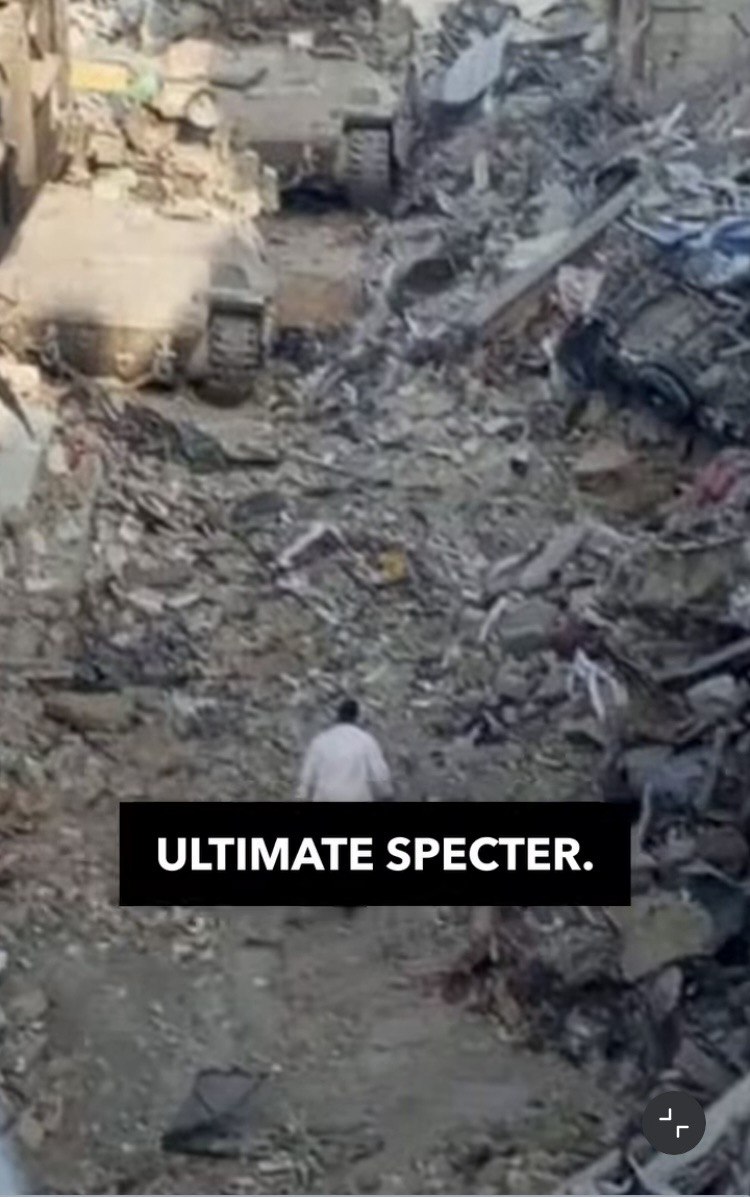 |
Le spectre ultime (qui exige une remise en question totale, tant individuelle que collective), à moins d’être hantés par lui à jamais |
Part
1
https://www.instagram.com/reel/De9Rsf1x0r-/
|
|
|
| The
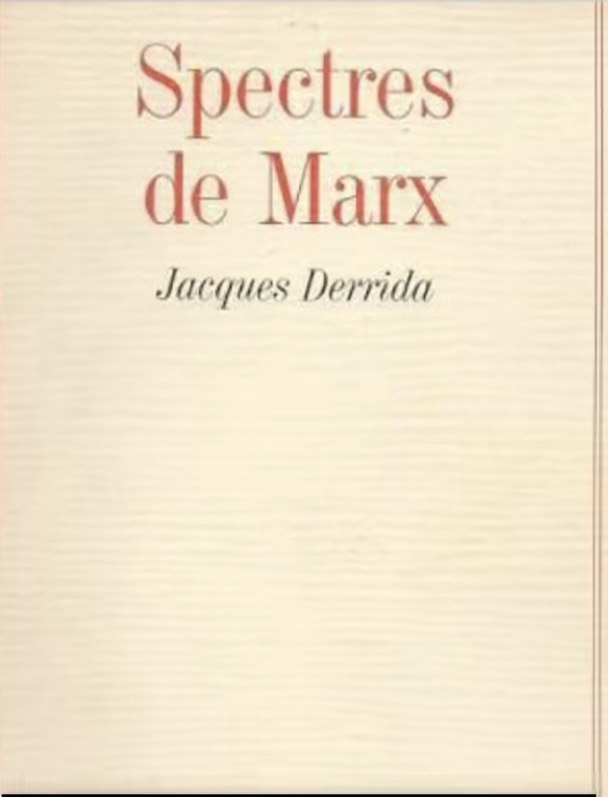
French philosopher, Jacques Derrida, in 1993,
wrote a book called Specters of Marx**). He
chose the word specter carefully. It derives
from the Latin word meaning to look or to examine.
It has an etymological link to visibility and to the
act of examining. A specter isn’t just a spooky
figure. It is a presence that forces you to look
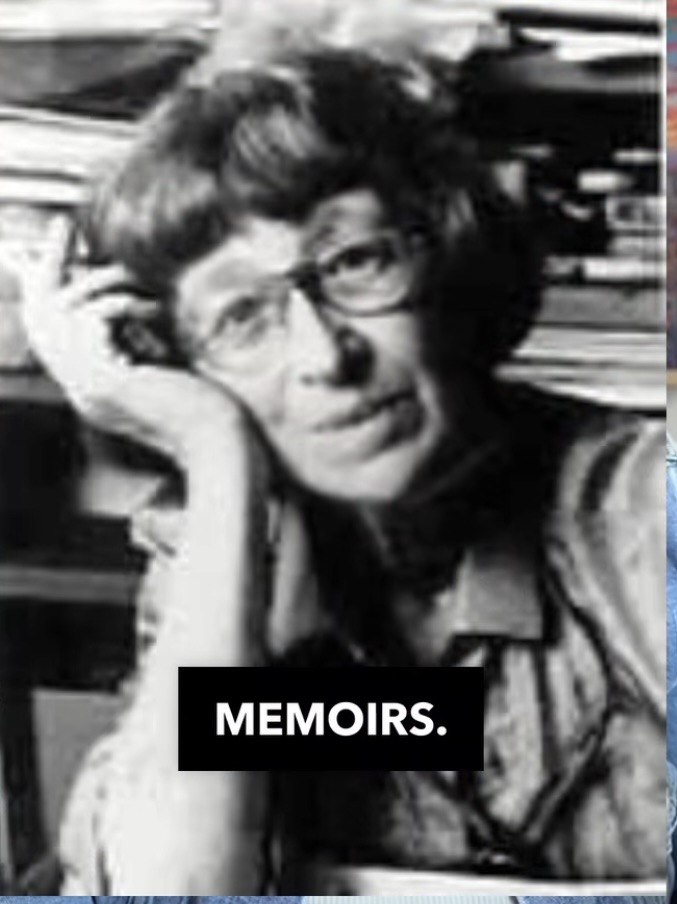
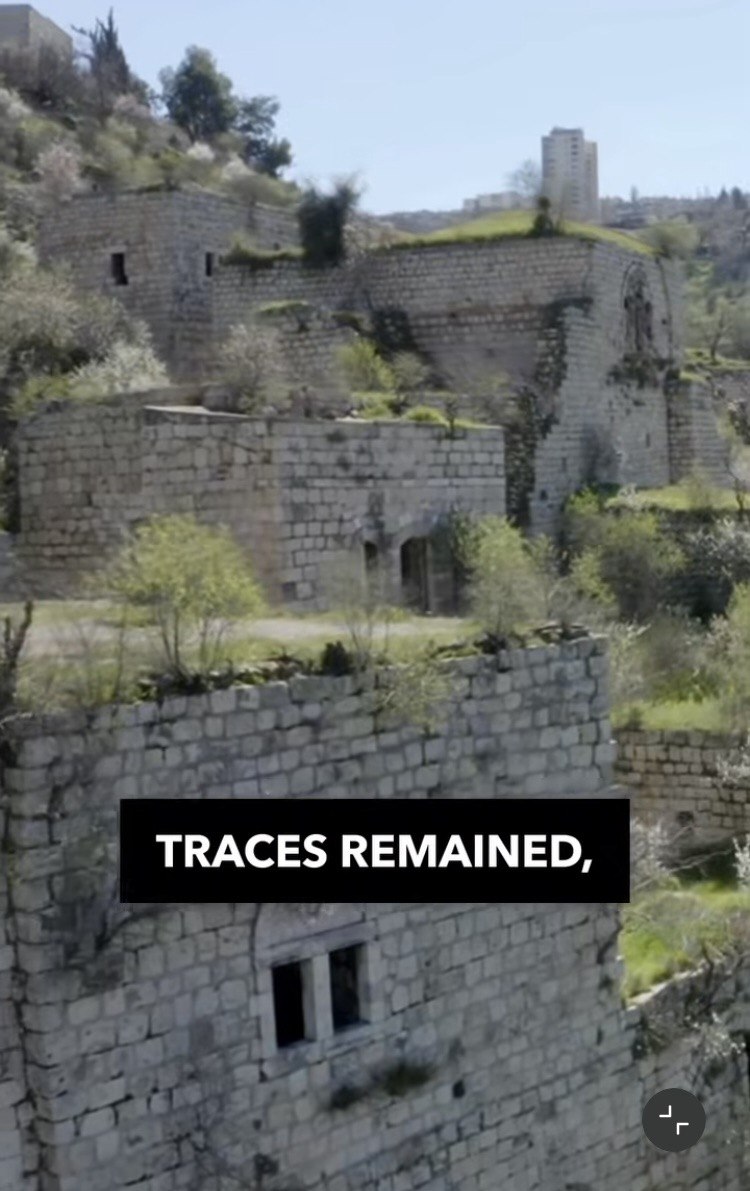
at it. It demands to be seen. Derrida believed that when a terrible injustice happens and no one is held accountable, the past doesn’t just fade away. It becomes a specter. It is not a physical body, but a trace and a voice that disrupts time. The specter interrupts the story and prevents it from closing. These specters are the return of the suppressed and the excluded, neither nor alive, nor fully present, nor fully absent. If that is true, the spirit of the Palestinian people is the ultimate specter. ` * Strike Phalanges/ Companies ** https://www.seuil.com/ouvrage/spectres-de-marx-jacques-derrida/9782021568509 |
|
En
1993, le philosophe français Jacques Derrida
a publié un ouvrage intitulé Spectres de Marx**.
Il a choisi le mot « spectre » avec soin. Ce
terme dérive d’un mot latin signifiant « regarder
» ou « examiner ». Il présente un lien
étymologique avec la visibilité et l’acte
d’examiner. Un spectre n’est pas seulement une
silhouette effrayante. C’est une présence qui vous
oblige à la regarder. Elle exige d’être vue. Derrida estimait que lorsqu’une terrible injustice se produit et que personne n’est tenu pour responsable, le passé ne s’efface pas simplement. Il devient un spectre. Ce n’est pas un corps physique, mais une trace et une voix qui perturbent le temps. Le spectre interrompt le récit et l’empêche de se clore. Ces spectres sont le retour de ce qui a été refoulé et exclu, ni tout à fait vivant, ni tout à fait présent, ni tout à fait absent. Si cela est vrai, l’esprit du peuple palestinien est le spectre par excellence. *unité de choc. **https://www.seuil.com/ouvrage/spectres-de-marx-jacques-derrida/9782021568509 |
Comments (selection)
|
Commentaires
|
Partie 2
https://www.instagram.com/brianabased/reel/De9SLA5Rpn5/
|
Ultimate Specter They may have killed the people and bulldozed the villages, but their spirits refuse to stay buried. The spirit keeps speaking, refusing to be erased. Palestinian poet Mahmoud Darwish encapsulated this exactly in his 2006 prose book, in the presence of absence. He imagined the King of Israel sitting on the balcony of a psychiatric institute, looking out over the ruins of Deir Yassin. The King clenches a glass of water nervously and crushes it in his hand. He is tormented by the ghost of the people he has killed. Darwish writes, “How have dead become ghosts, and how can ghosts defy me? Take Deir Yassin away from me again. Take the cries of the ghosts away, for I cannot apologize to them, nor do I want to.” In this, the King is haunted by the blood that he has spilled, but the ghosts remain because the spirit of the people cannot be killed. The attempt to erase the Palestinian people has never stopped. When you look at Gaza right now, it is hard to find the hope. The entirety of Gaza has been reduced to rubble, and for the occupation, it is still not enough. They starve the people through bureaucratic laws and language. They control the pipes where the water flows. Right now families are rationing every single drop of water to get through a single day, and the world watches, and the world’s leaders don’t do a damn thing. They are complicit. It feels like there’s no solution left, but the land remembers. The full erasure of the Palestinian people can never happen. Please help them plant another root in the ground. This water well that has been raising funds for is an act of resilience. It is a part of the story of the people who refuse to be erased. A well that provides water for a community is proof that they are still there, and their spirit remains.
|
Le spectre ultime Ils ont peut-être tué les gens et rasé les villages, mais leurs esprits refusent d’être réduits au silence. L’esprit continue de s’exprimer, refusant d’être effacé. Le poète palestinien Mahmoud Darwish a parfaitement résumé cela dans son recueil de prose de 2006, Présence Absence. Il y imagine le roi d’Israël assis sur le balcon d’un institut psychiatrique, contemplant les ruines de Deir Yassin. Le roi serre nerveusement un verre d’eau dans sa main et l’écrase. Il est tourmenté par le fantôme des personnes qu’il a tuées. Darwish écrit : « Comment les morts sont-ils devenus des fantômes, et comment ces fantômes peuvent-ils me défier ? Enlevez-moi à nouveau Deir Yassin. Enlevez-moi les cris des fantômes, car je ne peux pas leur demander pardon, et je ne le veux pas non plus. » Ici, le roi est hanté par le sang qu’il a versé, mais les fantômes persistent car l’esprit du peuple ne peut être anéanti. La tentative d’effacer le peuple palestinien n’a jamais cessé. Quand on regarde Gaza aujourd’hui, il est difficile de trouver de l’espoir. Toute la bande de Gaza a été réduite en ruines, et pour les occupants, ce n’est toujours pas suffisant. Ils affament la population à coups de lois bureaucratiques et de discours. Ils contrôlent les canalisations par lesquelles l’eau s’écoule. En ce moment même, les familles rationnent chaque goutte d’eau pour tenir une seule journée, et le monde regarde, tandis que les dirigeants mondiaux ne font absolument rien. Ils sont complices. On a l’impression qu’il n’y a plus de solution, mais la terre se souvient. L’effacement total du peuple palestinien ne pourra jamais avoir lieu. Aidez-les, s’il vous plaît, à enfoncer une nouvelle racine dans le sol. Ce puits, pour lequel des fonds ont été collectés, est un acte de résilience. Il fait partie de l’histoire de ces personnes qui refusent d’être effacées. Un puits qui alimente une communauté en eau est la preuve que ses habitants sont toujours là et que leur esprit perdure.
|
| Comments
Haunted by ghosts, that
would explain what we see when soldiers leave the IDF
& go wild trying to process what they saw/did.
Ghosts don’t just leave you alone, they’ll carry them
forever
Your small donation gives us new hope to build our future… 😭😫🇵🇸 @brianabased Please speak about the situation of my young children; my daughter has sustained burns due to the difficult conditions in Gaza and is in need of medical treatment.💔💔💔
|
Commentaires
Hantés
par des fantômes, cela expliquerait ce que l’on
observe lorsque des soldats quittent l’armée
israélienne et perdent pied en essayant d’assimiler ce
qu’ils ont vu ou fait. Les fantômes ne vous laissent
pas simplement tranquilles, ils vous poursuivront pour
toujours.
Votre petit don nous redonne l’espoir de construire notre avenir… 😭😫🇵🇸 @brianabased Parlez-nous s’il vous plaît de la situation de mes jeunes enfants ; ma fille a subi des brûlures en raison des conditions difficiles à Gaza et a besoin de soins médicaux.💔💔💔
|
 https://www.philomag.com/articles/derrida-face-au-conflit-israelo-palestinien |
|
| This article discusses Derrida’s position on the Israeli-Palestinian conflict. | Cet article traite de la position de Derrida sur le conflit israélo-palestinien. |
|
SERIES: PHILOSOPHERS AND THE ISRAELI-PALESTINIAN CONFLICT (2/5)
Derrida on the Israeli-Palestinian Conflict
With a certain modesty, Jacques Derrida (1930–2004) defended throughout his life a position that was demanding in two respects: boundless friendship with both Jews and Palestinians; and recognition of the horror of all massacres. Here is a three-part look back at his vision of the conflict that has torn the Middle East apart for more than half a century.
While Sartre’s
position on the Israeli-Palestinian conflict
evolved, Jacques Derrida’s remained remarkably
consistent, however the
philosopher may have refined it throughout his
body of work. Derrida’s perspective, expressed in
scattered remarks, hinges on two inseparable
points, reaffirmed in *La Contre-Allée* (with Catherine Malabou,
1999): on
the one hand, a “bond that remains indestructible
[…] with any Jewish community,” regardless of “the
violence inflicted on the Palestinians”; on the
other hand, an “unlimited alliance with the
Palestinian cause […],” despite the most brutal
acts of terrorism. Derrida would constantly seek
to hold both together: to escape the mere tallying
of the dead without evading the horror of each
death—for “all the disasters of this time […] are
irreducibly singular” (De quoi demain?,
with Élisabeth
Roudinesco, 2001)—to go beyond
the logic of violence that responds to violence
not to obliterate evil but, quite the contrary, to
confront it in all its nakedness, all in order to
perhaps open up the possibility of “living
together.” Three major stages mark this orbital
reflection, which revolves around a single center.
1995: From the Dialogue with
Levinas to the Question of the State of Israel
Derrida undeniably shares this
hope. But this hope, like all hope, is marked
by uncertainty. “Has this political invention in
Israel ever come to pass? I am among those who
await it—this ‘political invention’ in
Israel—among those who call for it in hope, and
today more than ever with a despair that recent
events, to mention only those, do nothing to
alleviate (for example […] the resumption of
colonial ‘settlements’ or a certain Supreme Court
decision authorizing torture, and, more generally,
all the initiatives that suspend, divert, or
interrupt what we continue to call, so to speak,
the ‘peace process’).” In his view, Levinas
does not confront this gap, this fracture widened by
evil. “Silence is maintained regarding the rules
[…] that would provide us with the ‘best’ or least
bad mediations: between the ethics or sanctity of
messianic hospitality on the one hand, and the
‘peace process’ on the other,” as it unfolds
in practice. The question is of the utmost
importance: for in it—in Israel’s relationship with
Palestine—lies the possibility for the Jewish state
to open up a new understanding of the political,
which, if it is to come to pass, will not happen
without the Palestinians—without a new relationship
with the Other. The evil that refuses to fade
away—which tears us apart and serves as a reminder
of the violence inherent in foundation, in any
foundation—cannot and must not be erased: we must
come to terms with it.
Separation, even the deepest and
most painful kind, does not therefore preclude the
possibility of living together. Rather, it is
the very condition for it. And in a sense, for
Derrida, living together is not made possible by
seeking to eradicate the evil that tears us apart;
rather, it is only by both sides coming to terms
with it in all its brutality and rawness—by “acknowledging”
it—that coexistence becomes conceivable. In passing,
Derrida notes with hope the “returns
(reflections, repentances, realizations) […] that
are becoming increasingly frequent,” and the
willingness to “draw political consequences from
this reflection on the past” in both Israel
and Palestine. He does not, however, downplay the
extreme difficulty of the task. For what must be
confessed is the “unconfessable,” the “impossible”—that
which, in the acknowledgment of horror and the
confession of “guilty conscience,”
undermines the very foundations of each side. We
must “begin by stating this antinomy, by
acknowledging it, by admitting it to ourselves and
to the other—the utterly other—to the stranger,
and even to the enemy.”
“We have to live together”: this phrase can be understood in two ways.
A first meaning “does not wait
for peace.” “We have to live together—we have no
choice”: a demand that is primarily economic,
given how high the price of hostilities is. But the
phrase can also be understood in another sense: “We
must live well together”—to live well, in a
way that can only be achieved together, which, to be
at peace with itself, must be at peace with the
Other, by welcoming—without seeking to exorcise
it—the specter of evil, both committed and suffered,
the presence of the dead and the living with whom we
must share the earth and whose haunting undermines
the refuge of a sovereign, static identity. “Palestinians
and Israelis will truly live together only on the
day when peace (and not merely an armistice, a
ceasefire, or the peace process) takes root in
bodies and hearts, when those who have the power
[…] have done what is necessary to take the
initiative—at first, wisely and unilaterally.”
Peace requires renouncing the economic accounting of
death and suffering, of reprisals and vengeance, and
the political logic of compromise or escalation. It
presupposes an initiative that is “unilateral
prior to any future exchange or reciprocity.”
Someone must affirm peace—without guarantee or
certainty—if peace is to come about. How might this
destructive logic be halted? For the philosopher,
the question has no answer: “The ‘how’ must be
invented by each person at every moment. There
would be no individual responsibility if a moment
were available in advance. ”
|
SÉRIE : LES PHILOSOPHES FACE AU CONFLIT ISRAÉLO-PALESTINIEN (2/5)
|