“The Troubadours, these poets often knights, became erudites because they travelled, then venturing towards India. In Khorassan, the northern province of the Persian empire straddling over Iran and Afghanistan, the troubadours exhilarated by the oriental rhythms and chants learned its language, the Farsi. Imbued with all the subtleties of the Persian language some troubadours pure in heart had been initiated by Sufi brotherhoods to another level of celebration of human feelings. The one where the love towards the Divine inspires the mystic and melts itself by the beauty of the verses embodying It with the love for the well-beloved lady.
The great Persian mathematician and astronomer Omar Khayyam, as early as the 12th century had raised the minds of his time by the freedom of his tone towards religion, which he didn’t need in order to understand the cosmos and the breath animating it. Some times later, his compatriot the poet Rumi (1207-1273), a Muslim mystic founder of the Sufi brotherhood of the Whirling Dervishes, will pave the way to the inter religious dialogues with the order of the Franciscans, created by Francisco of Assise (1182-1226). Touched as much by the music of these luminous Sufis than by the burning intensity of their poetry, the Troubadours brought back this poetical concept in which the temporality melting within the spiritual lifts up the very nature of feelings of love towards the heights of the ideal. Thus, the Troubadours were transcribing the fol amour of the amorous transport, not in Latin but in Langue d’Oc. By diverting the war energy using the Trobar, the art of finding the right word, the Troubadours inspired the knights of the South to express the nobility of their feelings to the lady of their heart. By raising the scale of sentiments to its ultimate combustion point through a divine allegory, the « Fin Amor » of the Troubadours gave birth to the « Amour Courtois », in the courts of the Counts of Toulouse and Eleanor of Aquitaine. This is how since the 12th century the Christian mariage consecrates mutual consent by asking “Do you accept to take as spouse?… ”, contrary to forced mariages where young girls are sold like cattle.”
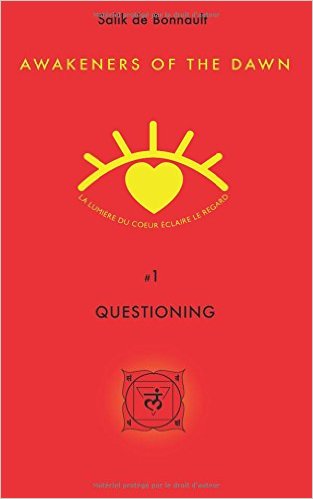
excerpt from https://awakenersofthedawn.com/ by Salik de Bonnault
https://www.instagram.com/reel/DUJG7o7iWm9/?igsh=MXA2ZmF1dGhzZGgweg%3D%3D